The short answer
Opening on Sundays adds scanner hours to a clinic; it does not fill the ones already paid for. Across UK ultrasound clinics UpMedico manages, 38% of weekly scanner hours sit idle, mostly on Tuesday and Wednesday afternoons, at £180 to £220 each. A six-hour Sunday session adds about £376 in wages at NHS weekend rates. For a scan clinic, weekend opening pays only when weekend demand is already being turned away; empty weekdays need mid-week patient acquisition instead.
In this article
- 1.What a Sunday shift costs before the first scan
- 2.Why the weekend looks like the answer in your reports
- 3.How UpMedico decides between a longer weekend and a fuller Tuesday
- 4.Weekend opening versus mid-week acquisition: the numbers
- 5.The calls that show whether the weekend is really full
- 6.Frequently asked questions
What a Sunday shift costs before the first scan
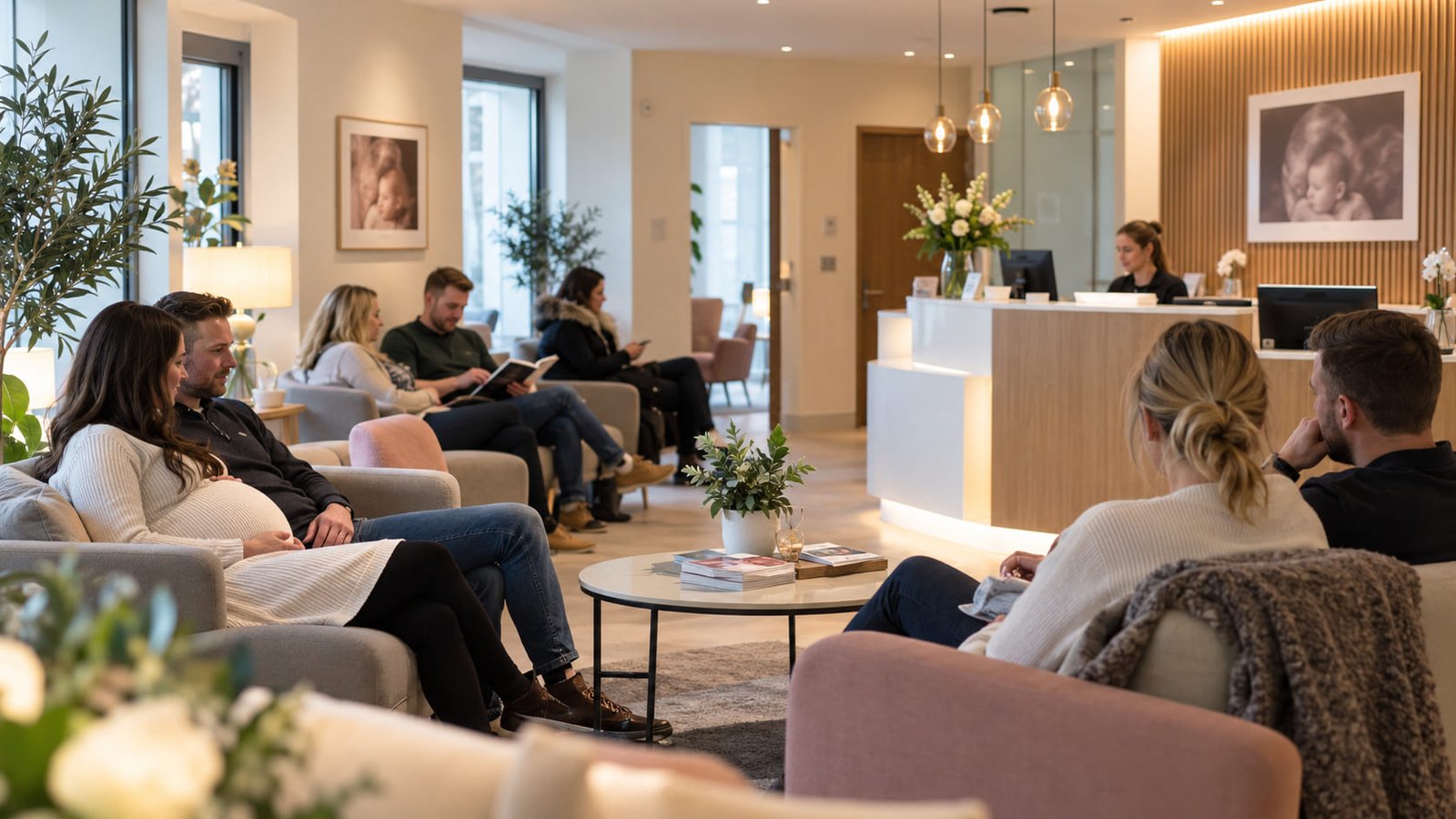
A Sunday opening is usually sold to owners as extra capacity. Capacity is the one thing most scan clinics already have spare on a weekday. Across the private ultrasound clinics we work with, 38% of available weekly scanner hours sit idle, clustered on Tuesday and Wednesday afternoons, and UpMedico’s working estimate puts each idle hour at £180 to £220 once fully loaded.
Now add a Sunday. Taking NHS Agenda for Change rates as the reference, with the sonographer at the Band 7 entry point of £25.26 an hour and the receptionist at Band 3 on £13.17, Sunday work is paid at time plus 60% and time plus 69% respectively. A six-hour Sunday session costs about £376 in wages, against roughly £231 for the same six hours on a Tuesday.
Across four Sundays that is around £1,500 a month, before employer National Insurance, pension or heating. Private clinics set their own rates, and GOV.UK puts it plainly: “employers do not have to pay workers for overtime”. Your own rota rates replace the NHS ones; the shape of the sum stays the same.
A longer Saturday costs less but is not free. At time plus 30% for the sonographer and time plus 35% for the receptionist, the same six hours on a Saturday come to about £304, nearly a third more than a Tuesday.
The harder number is what a Sunday does to the rest of the week. On a scanner staffed for 40 hours, just over 15 hours already sit empty, roughly £2,700 to £3,300 every week.
If the new Sunday fills with patients who would otherwise have booked Saturday or a weekday evening, the clinic pays more wages for the same number of scans, and utilisation falls from around 62% to about 54% of a 46-hour week.
The Sunday also has to earn its keep on its own. At an early pregnancy fee of £70 to £95, an NHS-pegged session needs four to six net new scans just to cover direct wages. Net new is the phrase that matters: a Sunday patient who used to come on Saturday adds wages, not revenue.
Under private locum rates, where sonographers frequently charge £70 to £80 an hour on Sundays, the break-even hurdle is far higher. With the sonographer at £80 an hour, a receptionist at £20 and £150 of machine and room overhead, a six-hour session costs about £750 and needs 8 to 11 completed scans, up to 61% of an 18-slot diary, to cover staffing and room overheads before generating any operating profit.
Why the weekend looks like the answer in your reports
Weekend opening usually starts as a reading of a dashboard. Google Ads reports conversions against the date the ad was clicked, not the date the scan takes place, so a Sunday evening full of bookings looks like Sunday demand.
It may not be. A booking made from the sofa on Sunday evening can be for Tuesday afternoon or for the following Saturday. An account that reads booking time as appointment time will tell you the weekend is when patients want to be scanned, when often it is only when they decide.
Across ultrasound accounts managed by UpMedico, 62% to 68% of Google Ads conversions recorded between Friday 6pm and Sunday midnight are for appointments attended between Monday and Friday of the following week. The weekend is when the patient decides; mid-week is when they actually want to be scanned.
Timing settings add to the illusion. Campaigns show ads “All day” by default, so spend follows search volume and the busiest search days produce the most conversions in the report. A generalist agency reads that as weekend appetite and recommends longer weekend hours, which is the e-commerce reflex: open when shoppers browse, and the stock will wait.
A scanner hour does not wait. A shop can sell Tuesday’s unsold stock on Sunday; a clinic cannot sell an empty Tuesday 2pm slot once it has passed. The useful question is whether the weekend diary is turning patients away, not whether patients search at weekends.
Two clinics we spoke to this autumn show why the answer differs. A six-year-old pregnancy scan clinic has weekends permanently at the limit and quiet Tuesday and Thursday afternoons, while a multi-site clinic closes on Saturdays altogether, although Saturday is one of the busiest booking days in pregnancy scanning. The first may well have weekend demand to capture. The second has not yet tested it.
How UpMedico decides between a longer weekend and a fuller Tuesday
UpMedico treats opening hours and advertising as one budget decision, because both are ways of buying booked scans. The starting point is the diary, split hour by hour into overflow and idle, rather than the campaign report.
Map overflow hours and idle hours
Eight weeks of diary data, by day, time and modality, show which hours fill without help and which stay empty. Overflow and idle are measured separately, because a full Saturday and an empty Tuesday need different fixes.
Count the demand you turn away
A full diary is not proof of unmet demand. We count it directly: online bookings abandoned at the date and time step once weekend slots are gone, calls to tracked numbers while the clinic is closed, and waiting-list requests. Only that number justifies extra weekend hours.
Price both routes per booked scan
A new weekend hour carries new wages on top of any acquisition cost. A mid-week hour is already paid for, so its only new cost is the cost per booked scan, from £24 to £36 for early pregnancy to £95 to £118 for MSK.
Test extra weekend hours for displacement
Extra weekend hours run as a fixed test with tracked bookings. If Saturday or weekday evening bookings fall as Sunday fills, the Sunday is moving patients, and the test ends.
Fill weekdays with acquisition
Empty Tuesday and Wednesday hours get a separate same-day campaign, a morning ad schedule and a tight radius. The weekday fix sits in the account, as set out in The Mid-Week Scanner Deficit.
For a clinic whose Saturday is genuinely turning patients away, a longer Saturday can be the cheapest growth available, because the demand already exists and costs nothing to find. It still leaves Tuesday where it was.
For the clinic that closes on Saturdays, the order reverses. Opening Saturday is a different decision from opening Sunday: it tests one of the busiest booking days in pregnancy scanning, at a lower premium, before any money goes on a seventh day. The displacement check still applies, because a busy Saturday that empties Thursday evening has only moved the queue.
Weekday demand has to be found and booked, and the booking path decides how much of it lands. Our guide to getting more pregnancy scan bookings covers that path. For London Private Ultrasound, a central London clinic offering abdominal, pelvic and pregnancy scans, the rebuilt account produced a 20% increase in total bookings against the previous quarter.
Weekend opening versus mid-week acquisition: the numbers
The table sets the cost of a Sunday session against the cost of filling hours the clinic already staffs. Scanner and acquisition figures come from ultrasound accounts UpMedico manages in the UK; NHS wage figures use NHS Employers rates from April 2026, the locum session uses private Sunday market rates, and each row is labelled with its source.
| Metric | Weekend session vs mid-week fill, UK 2026 | Source |
|---|---|---|
| Weekly scanner hours left idle | 38%, mostly Tuesday and Wednesday afternoons | UpMedico client data |
| Fully loaded cost of one idle scanner hour | £180 to £220 | UpMedico working estimate |
| Idle cost per week, 40-hour scanner | £2,700 to £3,300 | UpMedico working estimate |
| Sonographer hourly pay, Band 7 entry: weekday / Sunday | £25.26 / £40.42 | NHS Employers, April 2026 |
| Receptionist hourly pay, Band 3 entry: weekday / Sunday | £13.17 / £22.26 | NHS Employers, April 2026 |
| Wages for a six-hour session: Tuesday / Sunday | £231 / £376 | UpMedico working estimate |
| Private locum Sunday session cost, six hours | £750 fully loaded (£80/hr sonographer + £20/hr reception + £150 machine and room overhead) | Private locum rates, UpMedico working estimate |
| Net new early pregnancy scans to cover Sunday wages, NHS rates | 4 to 6, at a £70 to £95 fee | UpMedico working estimate |
| Sunday early pregnancy break-even occupancy | 44% to 61% (8 to 11 of 18 slots) at private locum rates; 33% to 44% (6 to 8 of 18 slots) at NHS rates plus the same overhead | UpMedico operational model |
| Weekend digital bookings fulfilled mid-week | 62% to 68% | UpMedico Google Ads and PMS data |
| Cost per booked scan, early pregnancy | £24 to £36 | UpMedico client data |
| Cost per booked scan, pelvic (average fee £230) | £78 to £88 | UpMedico client data |
Read the true Sunday session cost, about £750 under private locum rates, against the cost of mid-week acquisition. Reallocating that single session’s budget into targeted Tuesday and Wednesday search campaigns, at an early pregnancy cost per booked scan of around £30, buys roughly 25 mid-week patient bookings, far exceeding the physical 18-patient capacity of a six-hour Sunday room.
On UpMedico’s model, opening Sundays only becomes mathematically rational when mid-week scanner occupancy exceeds 88%.
Sunday opening can still be the right call. It is a growth decision for a clinic whose weekend overflows, and a cost decision for one whose weekdays are empty. At an average utilisation of around 62% across our ultrasound accounts, the hours to sell usually exist already, as set out in the UK Private Ultrasound Clinic Growth Index.
The calls that show whether the weekend is really full
Turned-away demand rarely shows up in a booking system. A patient who finds no Saturday slot online simply leaves, and a caller who rings on a closed Saturday reaches voicemail and tries the next clinic. The phone is where weekend overflow becomes countable, because a tracked number logs every call, answered or not, with the time it came in.
In our ultrasound accounts, 42% to 58% of bookings arrive by phone depending on the scan. A clinic that cannot see its unanswered weekend calls is guessing at around half its demand.
In the ultrasound accounts we manage that stay closed on Sundays, between 25% and 30% of weekend inbound calls go unanswered or to voicemail. Call recording analysis shows that over half of these patients would accept a Tuesday or Wednesday afternoon slot if contacted during a rapid Monday morning triage, removing any need to fund an unprofitable Sunday opening.
The Call-to-Booking Framework™
UpMedico’s Call-to-Booking Framework™ combines healthcare-compliant call tracking, call recording, and structured intake analysis to identify why patient calls fail to convert, improving call-to-booking conversion by up to 20% within 90 days.
Applied to the weekend question, the recordings separate two callers who look identical on a dashboard: the one who wanted Saturday and would accept Tuesday, and the one who wanted Saturday or nothing. Only the second is a reason to open longer. The first is a script problem, and an offer of Tuesday at 2pm can solve it.
Recording patient calls means processing data concerning health, which UK GDPR treats as special category data. It is configured accordingly, with a consent message before the call connects, a defined retention period and access limited to the people who need it. The wider case for call tracking in clinics is set out separately.
What this looks like with UpMedico running your Google Ads
UpMedico manages Google Ads exclusively for private healthcare clinics in the UK and Ireland. Every engagement includes compliant campaign build, keyword-level call tracking and recording, and monthly analysis through our Call-to-Booking Framework™, so you see exactly which keywords produce booked assessments and scans, not just clicks.
If your current agency reports on clicks and impressions but can’t tell you your cost per booked patient, request a 20-minute Clinical Campaign Audit. We’ll show you the gap in your own account.
Frequently asked questions
Should a private scan clinic open on Sundays?
Only if the weekend is already turning patients away. A six-hour Sunday session costs about £376 in wages at NHS weekend rates and needs four to six net new early pregnancy scans just to cover them. Under private locum rates the session costs about £750 with overheads and needs 8 to 11 completed scans. If Sunday bookings simply move patients from Saturday or weekday evenings, the clinic pays more for the same diary.
Should a baby scan clinic open on Saturdays?
A clinic closed on Saturdays is skipping one of the busiest booking days in pregnancy scanning, so a Saturday test usually comes before any Sunday plan. Run it for a fixed period with tracked bookings and check whether weekday bookings fall as Saturday fills. At NHS rates, Saturday work costs time plus 30% for Bands 4 to 9.
How much more does it cost to staff a scan clinic at the weekend?
At NHS Agenda for Change rates, Saturday hours cost time plus 30% for Bands 4 to 9 and Sunday hours time plus 60%, with higher premiums for Bands 1 to 3. For a sonographer and a receptionist, a six-hour session costs about £231 on a Tuesday and £376 on a Sunday, before employer National Insurance and pension.
How can a scan clinic tell whether weekend demand is being turned away?
Count it rather than infer it from a full diary. The clearest signals are online bookings abandoned at the date and time step once weekend slots are gone, tracked calls arriving while the clinic is closed or fully booked, and waiting-list requests. Call recordings then show which callers would have accepted a weekday slot.