The short answer
Tuesday and Wednesday scanner hours stay empty because most Google Ads accounts spend evenly across the week, drifting toward cheap weekend demand. Across UK ultrasound clinics UpMedico manages, 38% of weekly scanner hours sit idle, each costing £180 to £220. Clinics fill them with a separate same-day campaign scheduled from 8:30 to 11:00 on quiet mornings, an 8 to 10 mile radius set to Presence only, live slot availability, and phones answered in that window.
In this article
What an empty Tuesday afternoon costs
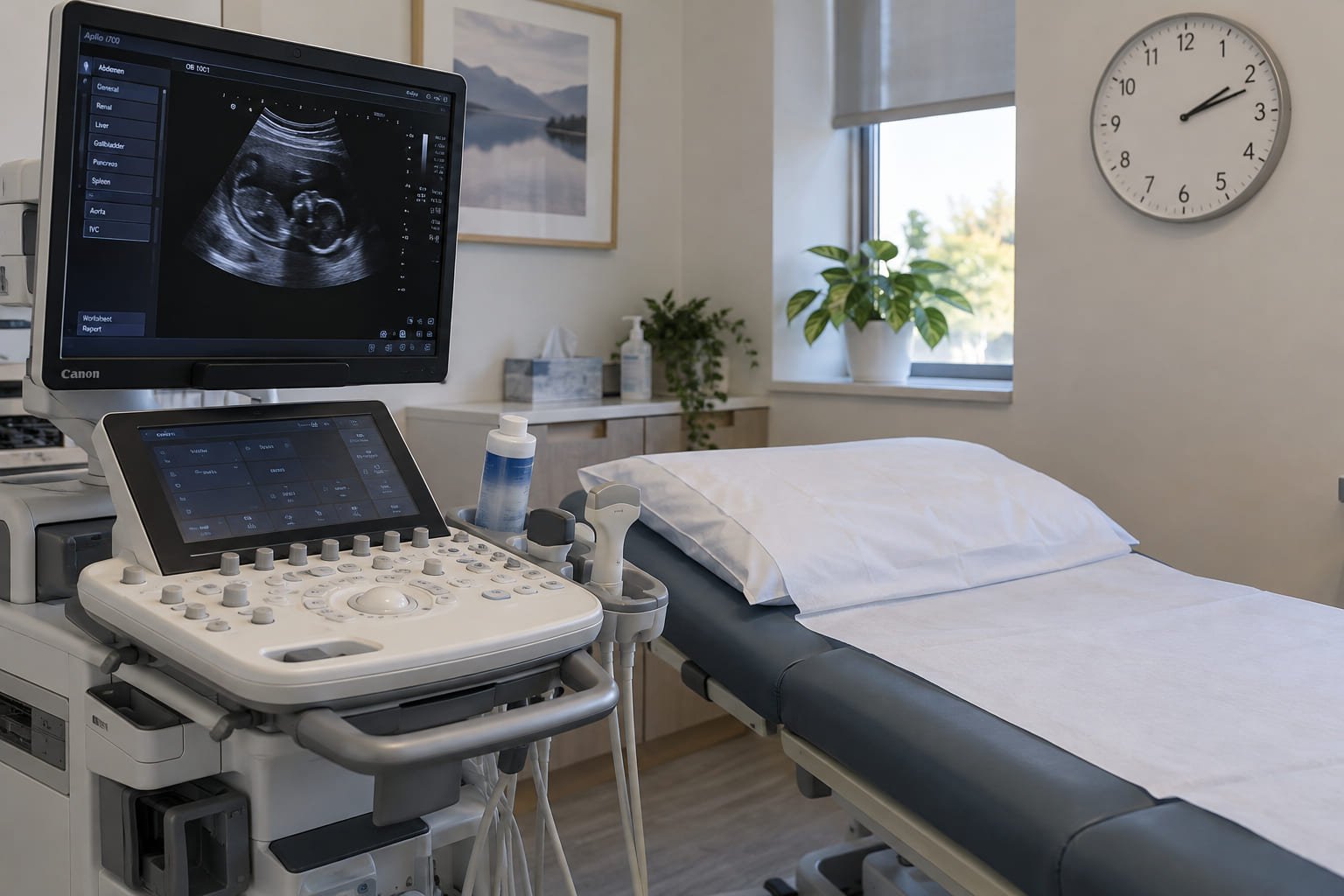
A scanner hour is the one thing a clinic cannot keep in stock. Once Tuesday at 2pm passes unbooked, its cost has already been paid: the machine, the room, the sonographer session and the CQC-registered facility around them. UpMedico’s working estimate puts that idle hour at £180 to £220 once fully loaded.
Across the private ultrasound clinics we work with, 38% of available weekly scanner hours sit idle, and the gaps cluster on Tuesday and Wednesday afternoons. That is a utilisation of around 62%, below the 65% to 70% at which a scanner typically breaks even, as set out in the UK Private Ultrasound Clinic Growth Index.
On a scanner staffed for 40 hours, that is just over 15 empty hours, or roughly £2,700 to £3,300 every week.
Owners recognise the pattern before they see the numbers. A six-year-old pregnancy scan clinic we spoke to this autumn has weekends permanently at the limit and Tuesday and Thursday afternoons, from 2pm to 4pm, reliably empty. Its answer so far has been to move staffed hours from weekdays to the weekend.
That moves the cost without creating demand. The weekday hours that stay open still need patients, and those patients have to be found and bought.
That demand exists. The NHS waiting list for non-obstetric ultrasound stood at 668,435 patients at the end of July 2026. The patient who books a Tuesday is rarely the one who books a Saturday: a baby scan is often a planned family occasion, while an abdominal or pelvic scan gets booked around symptoms and a working week.
Why generalist accounts leave mid-week hours empty
Google Ads campaigns are set to show ads “All day” by default, and plenty of accounts never change it. Spend then follows search volume rather than the diary, so the budget piles into Friday and Saturday demand the clinic would fill anyway.
The usual fix looks sensible and changes nothing. An agency adds a +20% bid adjustment for Tuesday mornings to a campaign running Target CPA or Maximise Conversions. Smart Bidding does not use manual time-of-day bid adjustments, so the modifier sits in the account doing no work while the monthly report says the schedule has been optimised.
Location settings leak too. The default option, Presence or interest, also reaches people who have shown interest in the area without being in it. For a same-day scan, a searcher 40 miles away is a click the clinic pays for and never scans.
Behind both sits a template borrowed from e-commerce, where unsold stock waits on a shelf until tomorrow. A scanner hour does not wait, and an account built for steady weekly volume will always under-serve the hours that need help.
How UpMedico fills Tuesday and Wednesday machine hours
UpMedico starts from the diary, not the keyword list. The first output is a map of idle hours by day, time and modality, set against the fee each scan type earns. Campaign changes come after that map, never before it.
A separate same-day campaign
Searches with immediate intent, such as “private scan today” or “ultrasound near me”, get their own campaign, budget and landing page. Because the campaign stands alone, its hours can be controlled even when the main account runs on Smart Bidding.
Dayparting from 8:30 to 11:00
The same-day campaign runs hardest on the mornings of the quietest days, usually Tuesday and Wednesday. A booking made before 11:00 can still land in that afternoon’s empty slot. On manual bidding the push is a bid adjustment; under Smart Bidding it is an ad schedule plus a dedicated budget.
An 8 to 10 mile radius, Presence only
We start with radius targeting of 8 to 10 miles around the clinic, tighter in central London, and switch the location option to Presence. Any wider radius has to be earned by booking data, not assumed.
Today’s slots on the landing page, protected by a deposit
The page shows the fee, the next free times and instant booking, because a same-day patient will not wait for a callback. The slot needs protecting before she arrives: Numi Scan’s Gateshead clinic, part of a multi-site network, takes a £30 deposit to confirm a booking, deducted from the price and non-refundable on cancellation. Our guide to getting more pregnancy scan bookings covers the rest of the booking path.
The modality split matters as much as the clock. Early pregnancy scans fill easily and cheaply, so they need their own budget cap or they absorb the mid-week push; the early pregnancy scan growth guide covers that campaign in detail.
For London Private Ultrasound, a central London clinic offering abdominal, pelvic and pregnancy scans, the rebuilt account produced a 20% increase in total bookings against the previous quarter, with cost per lead down 41% after the optimisation phase.
Mid-week capacity benchmarks for UK scan clinics
The figures below come from ultrasound accounts UpMedico manages in the UK. Every row is internal data, labelled by where it comes from.
| Metric | UK ultrasound accounts, 2026 | Source |
|---|---|---|
| Weekly scanner hours left idle | 38%, clustered on Tuesday and Wednesday afternoons | UpMedico client data |
| Average scanner utilisation | Around 62% | UpMedico client data |
| Utilisation needed to break even | 65% to 70% | UpMedico working estimate |
| Fully loaded cost of one idle scanner hour | £180 to £220 | UpMedico working estimate |
| Idle cost per week, 40-hour scanner | £2,700 to £3,300 | UpMedico working estimate |
| Cost per booked scan, early pregnancy | £24 to £36 | UpMedico client data |
| Cost per booked scan, MSK | £95 to £118 | UpMedico client data |
| Bookings made by phone | 42% to 58%, by modality | Call tracking data |
| Calls unanswered, 9:00 to 11:30 | 15% to 20%, peaks of 24% | Call tracking data |
Read the idle hour against the cost per booked scan. Because the hour’s cost is already committed, a mid-week booking only has to earn more than it cost to acquire. An MSK scan at £95 to £118 against a £220 fee clears that bar, even though it looks like the most expensive line in the report.
The morning window where dayparting meets the phone
There is a catch in the schedule above. The 8:30 to 11:00 window overlaps the morning peak when calls go unanswered: in our call tracking data, 15% to 20% of inbound calls to ultrasound clinics are missed between 9:00 and 11:30, with peaks of up to 24%.
With 42% to 58% of bookings arriving by phone, depending on the scan, a same-day campaign that runs while reception is stretched pays for the click and loses the scan. The ad schedule and the reception rota have to be planned together, with call assets limited to staffed hours and online booking carrying the rest.
The Call-to-Booking Framework™
UpMedico’s Call-to-Booking Framework™ combines healthcare-compliant call tracking, call recording, and structured intake analysis to identify why patient calls fail to convert, improving call-to-booking conversion by up to 20% within 90 days.
The recordings show whether the morning campaign works at the desk as well as in the account. A caller asking for “anything this afternoon” who is offered Saturday has found a slot that exists in the diary but not in the script.
Recording patient calls means processing data concerning health, which UK GDPR treats as special category data. It is configured accordingly, with a consent message before the call connects, a defined retention period and access limited to the people who need it. The wider case for call tracking in clinics is set out separately.

What this looks like with UpMedico running your Google Ads
UpMedico manages Google Ads exclusively for private healthcare clinics in the UK and Ireland. Every engagement includes compliant campaign build, keyword-level call tracking and recording, and monthly analysis through our Call-to-Booking Framework™, so you see exactly which keywords produce booked assessments and scans, not just clicks.
If your current agency reports on clicks and impressions but can’t tell you your cost per booked patient, request a 20-minute Clinical Campaign Audit. We’ll show you the gap in your own account.
Frequently asked questions
Why are Tuesdays and Wednesdays the quietest days for private scan clinics?
In the UK ultrasound accounts UpMedico manages, idle hours cluster on Tuesday and Wednesday afternoons. Weekend slots fill with little help because many pregnancy scans are planned as a shared occasion, while weekday hours depend on patients who book around work and symptoms. Without a schedule built for those hours, ad spend follows weekend demand.
Which scan types fill mid-week hours most profitably?
Medical scans usually do. In UpMedico-managed accounts a pelvic scan costs £78 to £88 to book against an average £230 fee, and an abdominal scan £88 to £105 against £240. Early pregnancy scans are cheaper to acquire but earn less per slot, so they work best as a capped share of mid-week budget rather than the whole of it.
What location radius should a private scan clinic target in Google Ads?
UpMedico starts at 8 to 10 miles around the clinic, tighter in central London, with the location option set to Presence rather than the default Presence or interest. Google requires a radius of at least 1 km. The radius is widened only when booking data shows patients travelling further.
Should same-day scan campaigns send patients to the phone or to online booking?
Both, with online booking leading. Same-day patients want to see a free slot and secure it at once, so the landing page should show today’s availability. The phone stays in the path for patients unsure which scan they need, provided calls are answered during the hours the campaign runs.