The short answer
For most private diagnostic clinics, an instant booking calendar outperforms an enquiry form, because a form’s conversion rate counts requests, not booked scans, and every request needs a callback. In the UK accounts UpMedico manages, early pregnancy pages with instant booking regularly reach 9% to 11%. Complex scans behave differently: 58% of MSK bookings arrive by phone. Attendance depends on deposits, and the CMA says non-refundable ones should stay a small share of the price.
In this article
What the wrong booking route costs a scan clinic
Start with the arithmetic of a single early pregnancy page. In the ultrasound accounts UpMedico manages, a London click for an early pregnancy scan averages £2.10 and the landing page converts at 8.2%, figures published in our UK Private Ultrasound Clinic Growth Index. Divide one by the other and each booking costs about £26.
Now send the same traffic through a route that converts a third as well. The click price stays put, so each booking costs roughly £77: four fifths of a £95 early scan fee, and more than all of a £70 one.
An enquiry form also flatters itself. Its conversion rate is session-to-enquiry: it counts requests sent, not scans booked. Every request then needs a callback by phone or email, and some of those patients have booked elsewhere, or stopped answering, by the time reception gets to them.
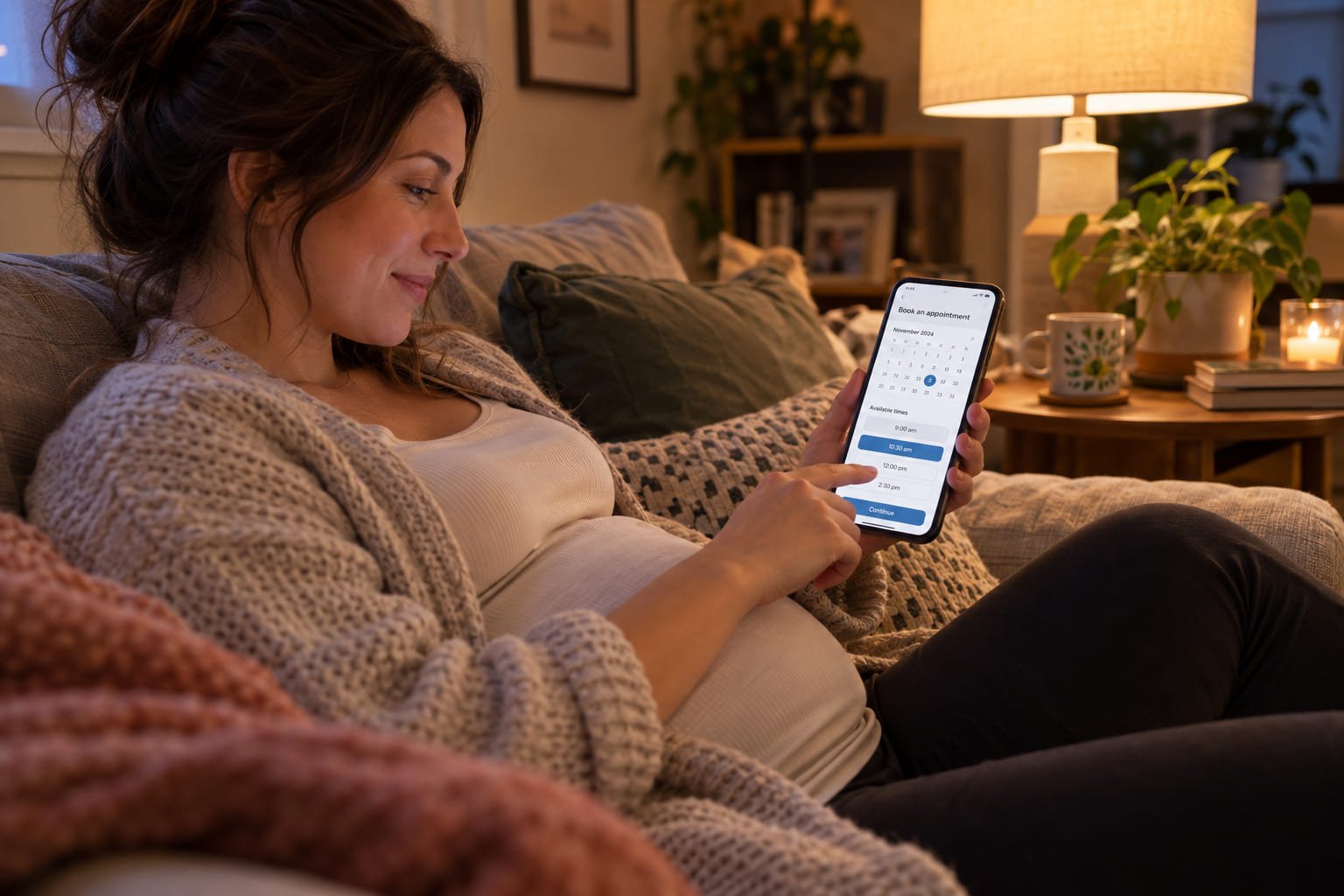
Attendance is the second leak. We count a late cancellation inside 24 hours as a no-show, because the cost to the clinic is the same: a scanner hour that stays empty, which UpMedico estimates at £180 to £220 once the scanner, the sonographer session and the room are loaded in.
NHS hospitals in England recorded 8.1 million outpatient appointments where the patient did not attend in 2024-25. In a private clinic, nobody else pays for the empty slot.
Why form-first templates fail diagnostic clinics
Most agency templates come from lead generation, where the enquiry is the product and a salesperson closes later. A scan clinic sells a time slot, and the patient wants to see Thursday at 10:40 and a price.
A physiotherapy clinic director we spoke to described it plainly: visitors reach the booking enquiry form and do not fill it in. Patients searching on a phone rarely wait, and the phone is where they search: UK adults spend 4.5 hours a day online, most of it on a smartphone.
Many live booking tools run on the software supplier’s own domain, and without cross-domain measurement Google Analytics counts one patient as two users and two sessions, as Google’s own documentation explains. The booking happens, but the advert that produced it loses the credit.
Phone conversions are counted on yet another basis. Google Ads records a call from an advert as a conversion when it lasts longer than a minimum duration the advertiser sets, so a two-minute call about bladder preparation can count as a conversion with nothing booked.
How UpMedico matches the booking route to the scan
The method UpMedico runs starts from the scan being sold, not the page template. Each modality gets the booking route its patients use, measured to one end point: a confirmed appointment.
Live calendar first for early pregnancy scans
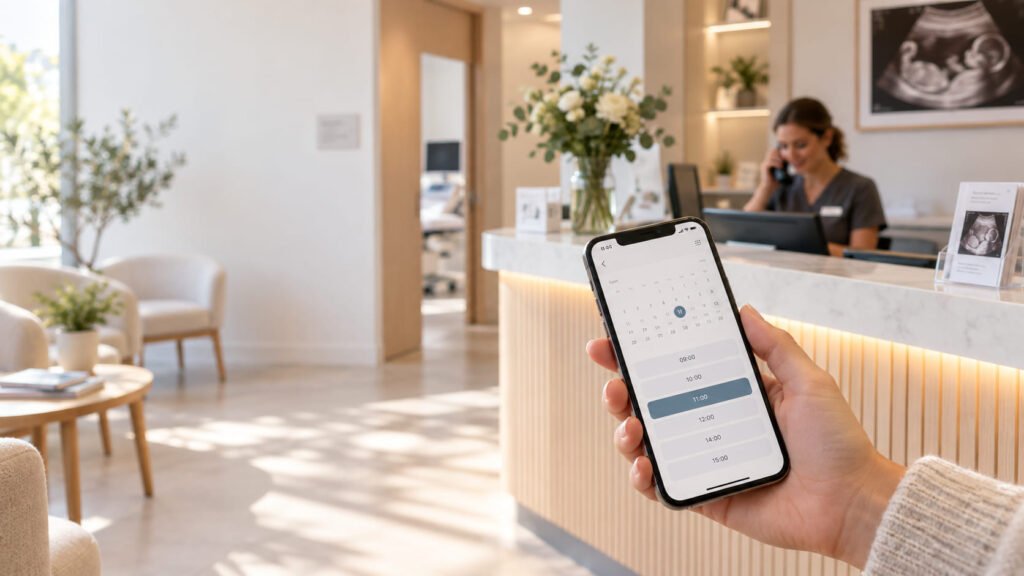
Early pregnancy is a fixed-fee scan with little preparation, and only 42% of its bookings in our accounts arrive by phone. The page shows the fee and the next free slots near the top, with the calendar embedded. Our dedicated landing pages with instant booking regularly reach 9% to 11%, against the 8.2% average. The wider playbook is in our early pregnancy scan growth guide.
Phone in plain sight for complex scans
Complex scans convert less on the page. Pelvic, MSK and abdominal landing pages in our accounts convert at 4.4% to 5.2%, because many patients want reassurance first, such as which scan they need or whether to fast beforehand.
In our call tracking data, 58% of MSK bookings and 48% of abdominal bookings come by phone. The calendar stays on the page, with a number tracked by keyword beside it.
One end point for every route
Every route reports into the same number: cost per booked scan. Online bookings come back from the booking system through cross-domain measurement, and calls are judged on recordings, before any landing page change goes live.
For London Private Ultrasound, a central London clinic offering abdominal, pelvic and pregnancy scans, the rebuilt account produced 603 qualified leads and a 20% increase in total bookings compared with the previous quarter.
Deposits that hold up under consumer law
A deposit taken at booking is the most direct lever on attendance, but the terms decide whether it holds. The CMA’s consumer guide says non-refundable deposits should only be a small percentage of the total price, and that cancellation charges must be a genuine estimate of the business’s loss. On a £70 early scan, a £30 deposit is not a small percentage.
The right structure follows the fee. For early pregnancy scans at £70 to £95, we recommend a modest holding fee of £15 to £20, or a pre-authorisation on the patient’s card, with the balance paid on arrival.
For specialist scans at £220 to £240, a deposit of £30 to £50 is sustainable, provided the terms always let the patient reschedule without penalty given reasonable notice, such as 24 to 48 hours.
Online bookings are distance contracts, so the patient normally has 14 days to cancel a service, and a scan inside that window needs the patient’s express request. This is a framework, not legal advice: a solicitor should check the final terms.
Booking architecture by scan type
The table compares booking architecture across UK private diagnostic clinics, combining tracking and campaign data from the accounts UpMedico manages with published evidence on how patients book and why they miss appointments.
| Metric | Early pregnancy | Pelvic / gynaecological | MSK (joints, soft tissue) | Abdominal (upper / full) | Source |
|---|---|---|---|---|---|
| Landing page conversion rate | 8.2% | 5.2% | 4.8% | 4.4% | UpMedico client data |
| Bookings made by phone | 42% | 52% | 58% | 48% | Call tracking data |
| Average private scan fee | £70 to £95 | £230 | £220 | £240 | UpMedico client data |
| Recommended first route | Live calendar with price | Calendar and tracked phone | Tracked phone and calendar | Calendar and tracked phone | UpMedico method |
| Recommended deposit | £15 to £20 holding fee or card pre-authorisation | £30 to £50, free rescheduling with notice | £30 to £50, free rescheduling with notice | £30 to £50, free rescheduling with notice | UpMedico recommendation |
Alongside the measured figures, UpMedico’s working model shows how each route typically performs: modelled estimates from industry benchmarks and our operational experience, not results from a single dataset.
| Booking route | Conversion (own denominator) | No-show, no deposit | No-show, with deposit | Source |
|---|---|---|---|---|
| Web enquiry form | 2.4% session-to-enquiry; 30% to 40% of enquiries lost during the callback | 28% | Not applicable | UpMedico modelled estimate |
| Live booking calendar | 8.8% session-to-booking (8% to 11% early pregnancy, 4.5% to 5.5% complex scans) | 24% | 4.2% | UpMedico modelled estimate |
| Inbound phone call | 14.6% Call-to-Booking Rate (qualified calls to confirmed appointments) | 18% | 3.8% | UpMedico modelled estimate |
The phone is a booking route too
Between 42% and 58% of ultrasound bookings in our accounts arrive by phone, so a clinic that fixes its calendar and ignores its calls has solved half the problem. In our call tracking data, 15% to 20% of inbound calls to ultrasound clinics go unanswered between 9:00 and 11:30, with peaks of 24%.
The Call-to-Booking Framework™
UpMedico’s Call-to-Booking Framework™ combines healthcare-compliant call tracking, call recording, and structured intake analysis to identify why patient calls fail to convert, improving call-to-booking conversion by up to 20% within 90 days.
The number we track for the phone is the Call-to-Booking Rate: the share of qualified calls handled by reception that end as a confirmed appointment in the booking system. Its denominator is calls, not sessions, so it is reported beside the web conversion rate and never on the same scale. Recordings then show why the rest did not book.
Recording patient calls means processing data concerning health, which UK GDPR treats as special category data. It is configured accordingly, with a consent message before the call connects and a defined retention period.
Practical fixes for reception are in our free clinic phone script, and the commercial case for call tracking in clinics is set out separately.

What this looks like with UpMedico running your Google Ads
UpMedico manages Google Ads exclusively for private healthcare clinics in the UK and Ireland. Every engagement includes compliant campaign build, keyword-level call tracking and recording, and monthly analysis through our Call-to-Booking Framework™, so you see exactly which keywords produce booked assessments and scans, not just clicks.
If your current agency reports on clicks and impressions but can’t tell you your cost per booked patient, request a 20-minute Clinical Campaign Audit. We’ll show you the gap in your own account.
Frequently asked questions
Does instant online booking convert better than an enquiry form for a private clinic?
For fixed-fee scans with little preparation, yes. Early pregnancy landing pages in UpMedico-managed accounts average 8.2%, and dedicated pages with instant booking regularly reach 9% to 11%. An enquiry form adds a callback step, and many patients book elsewhere before it happens.
Can a private clinic take a non-refundable deposit for an online booking?
It can take one, but the terms must be fair. The CMA says non-refundable deposits should only be a small percentage of the total price. For a £70 to £95 early scan, a £15 to £20 holding fee or a card pre-authorisation is the safer design, and a solicitor should check the terms.
Why does the phone conversion rate look different from the website conversion rate?
Because it is measured differently. Website rates divide bookings by sessions, while the Call-to-Booking Rate divides confirmed appointments by qualified calls. Google Ads counts a call once it passes a minimum duration, booked or not, so these figures never share one scale.
Should MSK and abdominal scan pages offer online booking?
Yes, but not on their own. In UpMedico’s call tracking data, 58% of MSK bookings and 48% of abdominal bookings arrive by phone, because patients want to check which scan they need. The best pages show the calendar and a tracked phone number side by side.