
More than 2 million UK adults are now paying privately for GLP-1 weight-loss medication, roughly seven times the number receiving it through the NHS. That demand is real, but the advertising rules around it are the strictest in private healthcare marketing.
Wegovy, Mounjaro and every other injectable weight-loss medicine are prescription-only medicines (POMs), and POMs cannot be advertised to the public under UK law. Clinics that get this right build a booked consultation pipeline. Clinics that get it wrong get their ads pulled and their brand named in an ASA ruling. This article covers both: the compliance boundaries and the growth strategy that works inside them.
In this article
- 1.The UK weight-loss market by the numbers
- 2.The advertising rules that could get your campaigns banned
- 3.Why patient acquisition is different for weight-loss clinics
- 4.Strategy 1: build every ad around the consultation
- 5.Strategy 2: the four-step booking funnel
- 6.Strategy 3: local SEO and directory trust signals
- 7.Track what actually converts
- 8.FAQ
The UK weight-loss market by the numbers
The scale of this market is why so many clinics want in, and why so many rush the marketing. An estimated 1.6 million adults used a drug like Wegovy or Mounjaro in the year to early 2025, with a further 3.3 million saying they want to start within the next 12 months.
The private market grew 56% in a single year according to IQVIA, and 30% of adults in England now live with obesity, with a further 36% classed as overweight, per NHS England’s Health Survey. Demand outstrips what any single clinic can absorb. The bottleneck is not patients, it is compliant marketing.
The advertising rules that could get your campaigns banned
The Advertising Standards Authority has issued dozens of rulings against weight-loss clinics in the past year alone. Three rules matter most, and getting any one of them wrong is enough to have an entire campaign pulled.
Why patient acquisition is different for weight-loss clinics
Most healthcare marketing problems are about visibility. This one is about what you are legally allowed to say once you are visible. A dental clinic can show a smile. A weight-loss clinic cannot show the injection, the pen or the drug name, which strips out the exact assets most marketers reach for first.
There is also unusual competitive pressure. Around 80% of private GLP-1 purchases go through online-only telehealth providers, many with far bigger ad budgets than an independent clinic. A private clinic cannot outspend them. It can out-trust them by leading with the clinician, the assessment and the in-person relationship that a purely online service cannot offer.
Strategy 1: build every ad around the consultation, never the injection
The clinics winning this space have rebuilt their entire funnel around one idea: the ad sells a confidential weight-management consultation with a named clinician, not a drug. That single shift keeps campaigns live while competitors get suspended.
What the landing page has to avoid
The ASA treats a linked landing page as part of the ad. A page that names Mounjaro, prices a “pen”, or implies the consultation’s outcome is a prescription breaches the same rule as the ad itself. Keep drug names, pricing tied to medication, and clinical detail on gated, post-consultation pages only, as covered in our guide to landing pages for doctors.

Strategy 2: turn the consultation journey into a four-step booking funnel
A compliant ad only works if the journey behind it converts. Structure matters more here than in most niches, because every step also has to hold up against a compliance review.
Sussex Medical Chambers, a multidisciplinary private clinic UpMedico works with, built exactly this kind of assessment-led funnel across urology, endocrinology and general practice. Their managing director credits the structured approach for turning enquiries into a steady, compliant booking pipeline rather than a one-off spike.
Strategy 3: layer local SEO and directory trust signals onto every location
Paid search wins the click. Directory and local listings win the decision. A patient comparing a faceless telehealth app against a named local clinician almost always books the clinician, provided the trust signals are visible where they are searching.
This layered approach is the same one covered in our broader healthcare SEO guidance, and it compounds: every directory profile and review strengthens the next one, which is exactly what a paid-only competitor cannot replicate quickly.
Want a compliant campaign built for you?
See how UpMedico builds ASA-compliant Google Ads campaigns for private clinics.
Track what actually converts
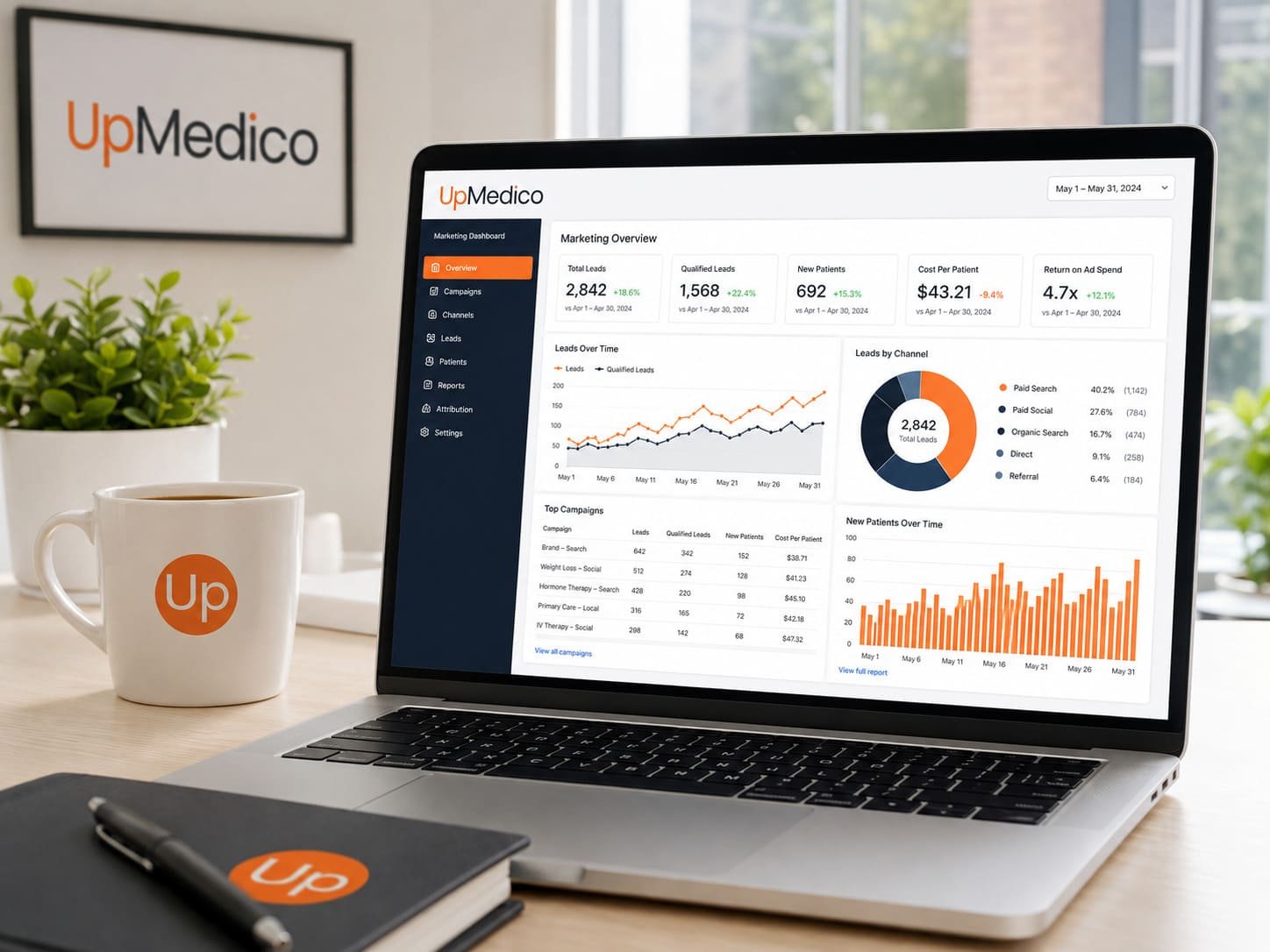
A compliant campaign still needs proper measurement. Reporting on cost per booked consultation, not cost per click, is what separates clinics that scale from clinics that guess. Tick off each item below as your campaign matures.
FAQ
Can I mention Mounjaro or Wegovy by name in my Google Ads or Meta Ads?
What’s a realistic cost per booked consultation for a weight-management clinic?
Do I need medical sign-off on ad copy before it goes live?
Can I use before-and-after photos of patients who’ve lost weight?
Is local SEO worth it if most competitors are online-only telehealth providers?
The GLP-1 opportunity is not going away, but the clinics that win it will be the ones treating compliance as the strategy, not an obstacle to it. Get the consultation-first funnel right and the bookings follow.
Ready to grow your weight-loss patient list?
Talk to UpMedico about a compliant, consultation-first campaign for your clinic.